About
The life, the thought, the institutions
Born in Sekondi in 1959. Orphaned at seventeen. Twenty people in a borrowed classroom in 1984. What followed is one of the more consequential bodies of Christian thought to come out of Africa.
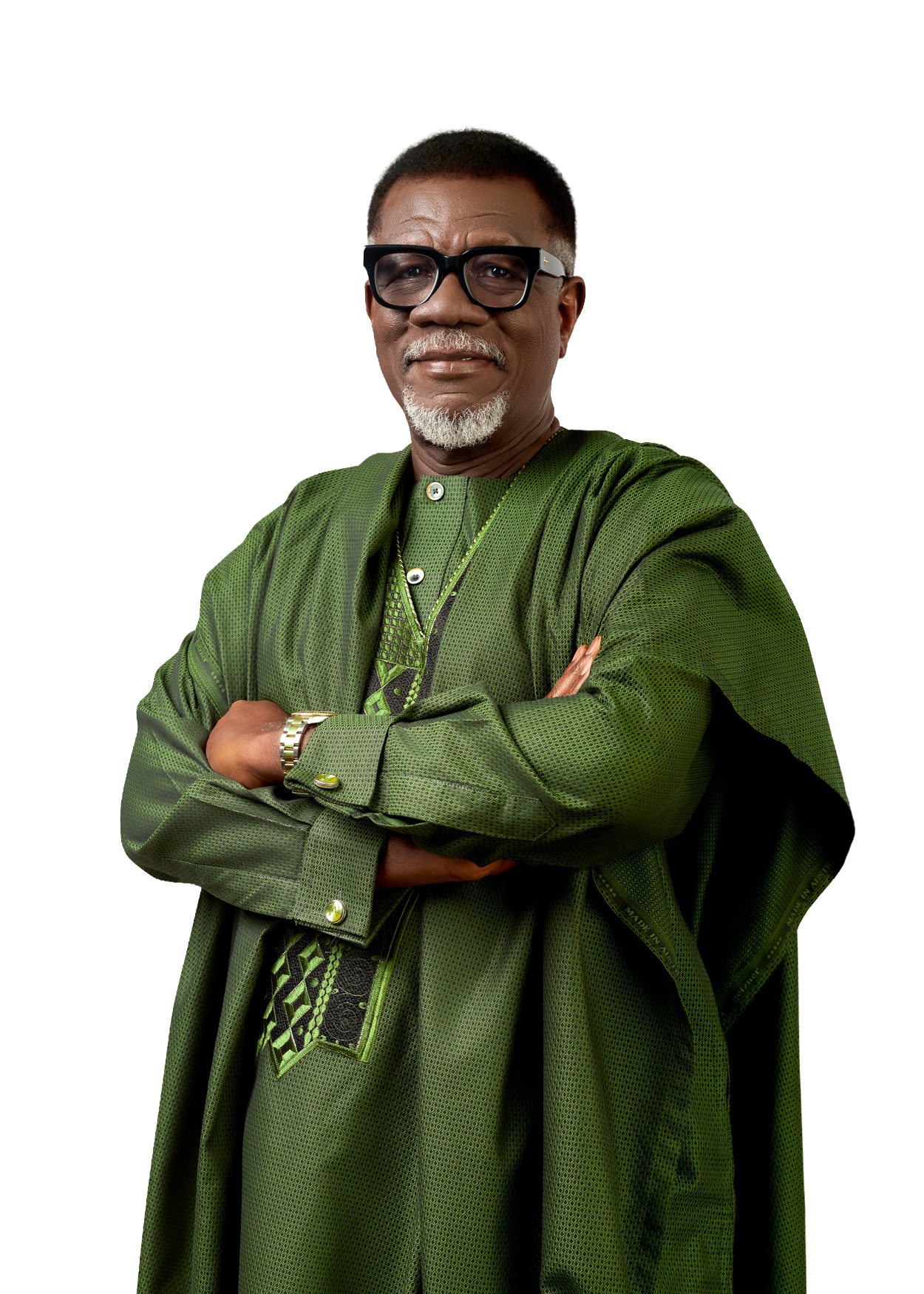
Origins
Sekondi, and what was lost early.
Mensa Anamua Otabil was born on 31 August 1959 in Sekondi, in Ghana’s Western Region, the fourth of five children of Dinah and Lloyd Otabil. He grew up first at Baka-ekyir, attending the Anglican Primary School near Gyandu Park, and moved to Tema in January 1966 when his father was promoted to Personnel Manager at the GIHOC Boat Yard.
He entered Swedru Secondary School in 1972 and completed his Ordinary Levels in 1977. His mother died in 1975 and his father the following year. He was seventeen.
Formation
A theology built from the text outward.
His spiritual formation moved through several streams — St. Alban’s Anglican Church in Tema, the Assemblies of God, the Power House Fellowship, and after his move to Accra the Kanda fellowship. He did not pursue formal tertiary education, teaching himself theology through correspondence study and sustained personal reading.
That fact is central rather than incidental. His theology was assembled from Scripture outward rather than inherited from a school, which is why it arrives at conclusions the academy did not anticipate. His doctorates are honorary, conferred for a body of work rather than the completion of one.
The founding
Twenty people, 26 February 1984.
While working in the Audio Visual Department of the Ministry of Information he met Edwin Donkor, later an ICGC pastor. On 26 February 1984 he convened the first meeting of what became the International Central Gospel Church at the Kanda Cluster of Schools in Accra. Twenty people gathered in a classroom. The congregation later moved to the Sal Valley School, and in May 1986 into the rented Baden Powell Memorial Hall, which was home for a decade as membership passed four thousand.
He married Joy Otabil in 1986. They have four children: Sompa, Nhyira, Yoofi and Baaba Aseda.
The question behind the work
Is Africa cursed? The answer is written into the Scriptures, and it is not the one we were taught.
Heritage Lectures · Accra · June 1999
How the work is read
A different kind of charismatic voice.
Where much of the charismatic movement organised itself around deliverance and personal breakthrough, his teaching built around dignity, capacity, structure and stewardship — the conviction that God’s people are equipped to build rather than only to receive.
Scholars have needed new terms for it. Emmanuel Kingsley Larbi coined African Evangelical Pentecostal Liberation Theology. Paul Gifford, in Ghana’s New Christianity, described a socially and politically conscious cultural adjustment theology and called him possibly the most interesting Christian voice being heard in Africa. Marleen de Witte’s study of Buy the Future placed the argument within the wider account of charismatic Pentecostalism and African liberation.
He has turned the same analysis inward, delivering a widely circulated assessment of the charismatic church in Africa that named spirituality and spontaneity among its strengths, syncretism among its threats, and warned that failure to reform would undo what the movement has built.
The record
Four decades, in order.
1959
Born in Sekondi
1977
Completes O-Levels, Swedru Secondary School
1984
Founds the International Central Gospel Church
1986
Marries Joy Otabil
1988
Founds Central University and Central Aid
1993
Beyond the Rivers of Ethiopia
1999
Heritage Lectures, “Is Africa Cursed?”
2000
William Ofori-Atta Memorial Lectures
2002
Buy the Future
2003
Founds Otabil and Associates
2007
Order of the Volta (Religion)
2026
The 2:42 Church and Leading the Church
The institutions
What the teaching built.
Founded 1984
International Central Gospel Church
Convened on 26 February 1984 with twenty people in a classroom at the Kanda Cluster of Schools in Accra. The congregation moved to the Sal Valley School, then in May 1986 into the rented Baden Powell Memorial Hall, which was home for a decade as membership passed four thousand. It now numbers around 1,150 branches and assemblies across Africa, Europe, Canada and the United States, with Christ Temple in Accra as its central assembly.
Founded 1988
Central University
Founded in 1988 as a pastoral training institute and grown into a full university. Its faculties now cover theology, business, economics, computing, architecture and pharmacy, based at Dawhenya. It exists on the conviction that the Church has no business asking a continent to build while leaving its people untrained.
Founded 1988
Central Aid
Also founded in 1988, an educational scholarship scheme financing schooling for needy students. It has become the largest non-governmental pre-tertiary scholarship programme in Ghana, and is the most direct expression of the teaching on capacity: dignity is not conferred by charity but by education.
Founded 2003
Otabil and Associates
Founded in 2003 as an executive and leadership consultancy, carrying the same analysis of structure, stewardship and accountability to organisations outside the church. Much of the governance material in the Academy's leadership track originates here.
Recognition
Honours and citations.
- Order of the Volta (Religion), Government of Ghana, 2007
- Millennium Excellence Award
- Most Influential Person in Ghana, ETV Ghana poll, 2015
- Named among the 100 Most Reputable Africans, 2018
- Multiple honorary doctorates